
Tankless Water Heaters
At Crowley Plumbing Co, we provide professional tankless water heater installation, repair, and replacement for homes throughout Crowley. Tankless systems deliver hot water on demand while helping save space and improve energy efficiency compared with traditional storage tanks.
Tankless water heaters in Crowley homes and garages
When tankless water heaters in Crowley, TX start to sputter, Crowley Plumbing Co treats the job as part of the whole house, not a gadget on the wall. We help homes and businesses in Crowley and in Cresson with repairs, retrofits, and the storage hot water heater that still fits some closets. The crew that already knows the builder layouts and the older shutoff spots on these streets will also handle fixture work, drain cleaning, pipe repair, garbage disposal repair, and emergency plumbing when a line fails at night.
In Crowley 76036, many slab houses still use a garage or a hall closet for the hot water heater, and that choice decides whether a tankless retrofit is even possible. Moderately hard to hard city water leaves mineral film on heat exchangers, so we talk about flushing and inlet screens on the first visit. Testing happens before anyone cuts a vent chase, and tools go away with shutoffs left where you can find them. The shop answers 24/7 when a unit dies in the night.
If the unit is clicking, if the shower goes cold after a minute, or if you are comparing a tankless conversion to keeping a tank, start with the safe checks below so the visit goes faster.
- OUR PROCESS
What to Expect When You Call for Plumbing Service
From the first call to the final check, Crowley Plumbing Co keeps the plumbing service process simple, clear, and focused on solving the problem correctly.
1. Schedule Your Plumbing Service
Tell us what’s going on and choose a convenient time for your plumbing repair or service.
2. Inspection & Professional Repair
We inspect the issue, explain the recommended solution, and complete the necessary plumbing repair or installation.
3. Final Testing & Quality Check
We test the plumbing system, check our work, and make sure everything is operating properly before we finish.
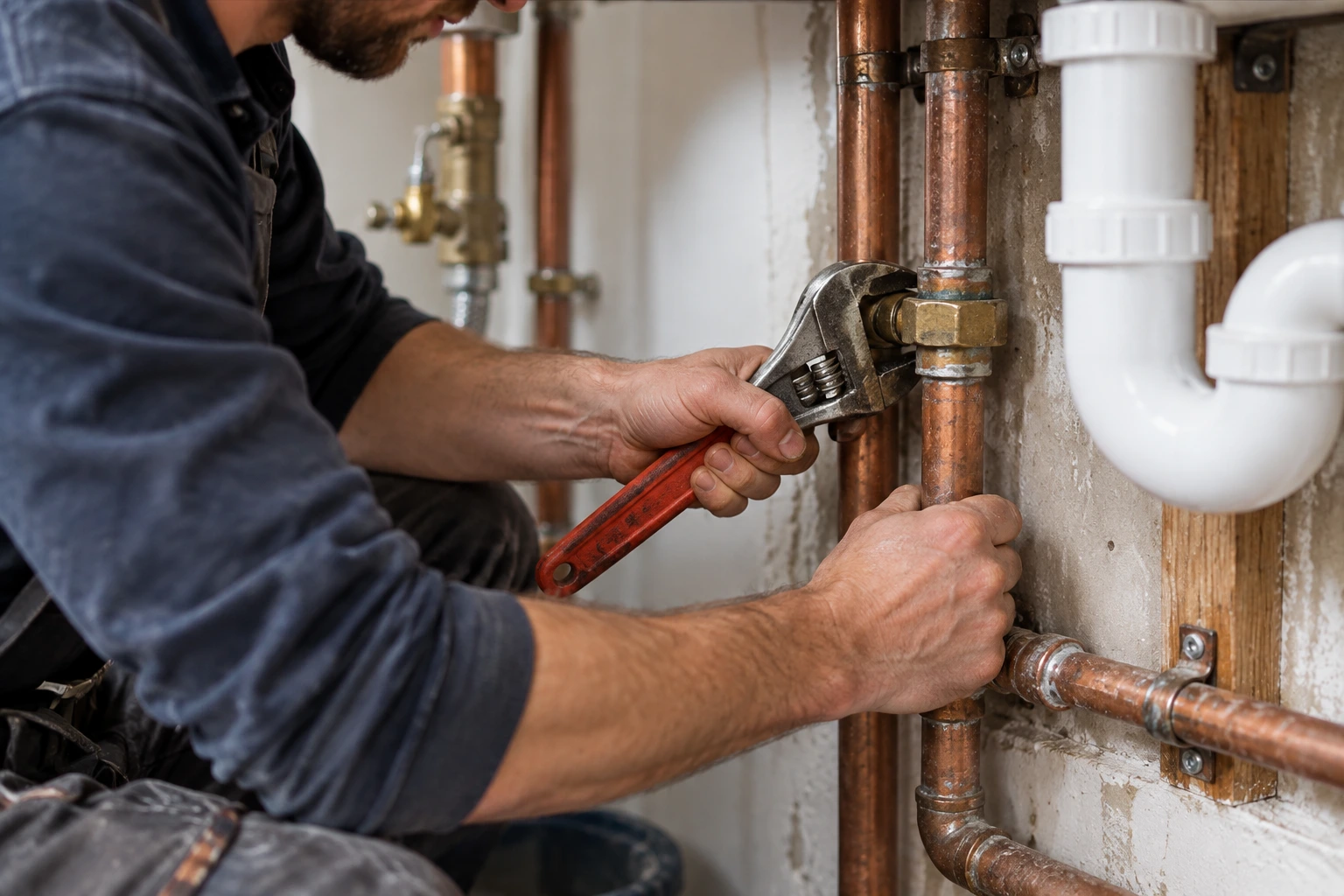
What to do first when hot water fails
When a tankless unit quits in the middle of a shower, a few quiet checks tell us more than another reset on the panel. Stay on the outside of the cabinet and leave the burners alone. Write down the time of day and whether more than one fixture failed. Then work through the safe list below so the visit starts with facts instead of guesswork.
Safe checks you can make
These checks take a few minutes and they do not require tools. They tell us whether the house lost all hot water or only one bath, and whether the unit still has power. Skip anything that means opening the burner cabinet.
- Check whether more than one fixture lost hot water
- Photograph any error code on the display
- Confirm the unit has power at the breaker or outlet
- Find the water shutoff that feeds the heater
- Note whether a hard freeze or a long irrigation day came first
What to leave alone until we arrive
A few common moves make the visit longer or leave the unit unsafe to fire. Resetting over and over can mask an error we need to read. Opening the heat exchanger or pouring cleaner in by hand can damage passages we could have flushed through the service ports.
- Do not keep tapping the reset button
- Do not take the heat exchanger apart
- Do not pour vinegar in without isolation valves
- Do not block the vent with stored boxes
- Do not assume a cold shower means a dead unit
Tankless trouble we see in Crowley houses
Mineral scale inside the heat exchanger
When a tankless coil scales up, showers go lukewarm and the unit runs longer to chase the same temperature. City water here is moderately hard to hard, and that mineral load sits on the passages inside the heat exchanger. Summer irrigation raises demand, so the unit cycles harder just when the coil is already coated. The house feels it as a slow loss of hot water rather than one dramatic break.
Signs it is time to call
- Showers that start warm and fade
- Error codes that mention overheat or scale
- A unit that runs longer than it used to for the same bath
- White film on faucet aerators in the same house
- Hot water that never quite reaches the old temperature
- Two fixtures going cold when they run together
- A dusty smell from the cabinet after long showers
We isolate the unit, hook a descaling pump to the service ports, and circulate cleaner until the passages open. Then we rinse, check the T&P valve, which relieves pressure if the system spikes, and run a temperature-rise test at a nearby tap. If the coil will not recover, we talk about replacement rather than another flush. Lasater Ranch houses on later suburban piping still see this because the water, not the pipe age, drives the scale.
Clogged inlet screens that mimic a dead heater
Grit from mains and flakes from the heater itself collect on the cold inlet screen. The unit then sees low flow and shuts down, which looks like a failed heater. Homes and businesses often replace parts that were never bad. A short screen rinse is the first hands-on step after we read the display.
What you might notice first
- No hot water at any fixture while cold water is fine
- A display that is on but the burner never lights
- Weak flow only at hot taps
- An error that clears after a reset then returns
- Screens that look packed when you shine a light at the inlet
- Sudden failure after city work on the main
- The unit clicking as if it wants to fire
We pull both screens, rinse them, and watch flow recover at the fixture. If they pack again within weeks, we look at sediment, a missing filter, or scale breaking loose inside the coil. A small filter on the cold feed slows that cycle on city water. This is also when we show you how the screens sit so the next check is simpler.
A gas line too small for a tankless conversion
Many builder layouts feed a storage hot water heater with a modest gas pipe that cannot keep a high-BTU wall unit firing when the burner opens wide. If you smell gas or suspect a gas leak, go outside immediately and call 911. This is a serious emergency that needs urgent attention from the gas company. Before we hang a tankless heater we measure pipe size, length, and other appliances on the same run.
How this shows up in the house
- The unit lights, then drops out when a second shower opens
- Other fuel appliances sag when the heater fires
- Long delay before ignition
- A burner that never reaches full roar
- The heater worked as a tank and failed after a tankless swap
- A half-inch pipe still serving a high-BTU wall unit
- Cold water at the far bath while the unit claims it is firing
A half-inch gas pipe that was fine for a tank often cannot hold pressure for a tankless burner at full fire. We size the new run, then complete that work as pipe repair before the heater goes on the wall. Pressure gets checked with the other appliances firing so the reading matches real use. Only then do we set the unit and watch two fixtures run hot together.
Closet installs that cannot vent or drain
In Crowley a garage is often easier than a hall closet because the exterior wall is right there for tankless venting. Closets bury the unit behind linens and leave no path for a concentric vent or a condensate drain. Slab floors do not offer a basement to dump that water. The wrong closet forces a messy chase through living space.
Clues at the heater
- A closet too tight to stand in front of the unit
- No exterior wall anywhere near the heater
- Water staining on the slab under the unit
- A vent that would have to cross a bedroom
- Boxes stored against the intake
- A condensate hose that just ends on the floor
- Rust or scale at a makeshift drain pan
We measure clearances, vent length, and whether a condensate pump can reach a laundry standpipe or a floor sink. If the closet cannot work, we move the plan to the garage and protect the water lines from freeze. That move is common on slab-on-grade houses where the original tank already lived in the garage. We do not punch a vent through a roof when a side wall will do.
Recirculation waits on long pipe runs
Tankless units heat water as it passes, so the pipe to a far bathroom still holds a cold slug. People call that a wait, or a cold-water sandwich when the pump and the heater disagree. Long runs in ranch-style houses make it more noticeable. Recirculation can help, but a pump that runs all day short-cycles the unit and adds scale.
What the fixtures tell you
- A long wait for hot water at a far bathroom
- A burst of cold after the water was already hot
- A pump that runs even when nobody is home
- Lukewarm water when two baths fill
- Recirculation that never quite reaches the last sink
- A button at the bath that does nothing
- Hot water at the kitchen and cold at the shower
We measure pipe length and talk through a timer, a button at the bath, or a dedicated return if one already exists. A mixing valve at a shower is sometimes the quieter comfort fix, which is fixture installation rather than a larger heater. On-demand hot water still needs a path, not just a bigger BTU rating. We set that up after the unit itself proves it can heat two fixtures.
Garage lockouts after a hard freeze
Poorly insulated garage lines can freeze, split, or trip a low-temperature lockout on the unit. Winters here stay mild until a hard freeze arrives, and then the garage wall heater is often the first to quit. We thaw only what is safe and we replace split PEX or copper. Closet units see less of this because they sit in conditioned space.
Early warnings in daily use
- No heat after a hard freeze
- A lockout code on a garage unit
- Drips from a split line on an exterior garage wall
- Ice on the condensate hose
- A unit that works in the afternoon and fails at dawn
- PEX that looks oval or split near the hanger
- Water on the slab only on the coldest mornings
After the line is sound we add insulation and keep the unit off an uninsulated exterior corner when we can. Deer Creek corridor garages that face open land catch more wind, so those water lines get extra attention. A condensate drain that ices over will also lock the unit out, and that is a separate clear. Summer is easier on these units, and winter is when garage installs show their weak spots.
When a tankless conversion is the wrong fit
The real choice in a tankless conversion is whether the house can support the unit, not whether a neighbor already hung one on a garage wall. Vent path, fuel pipe size, condensate, and water quality decide it on this street. We walk those four items in order so nobody buys a heater that cannot vent or cannot fire. Garage versus closet is part of that walk, because a tight closet can kill an otherwise good conversion.
Houses that can take a tankless retrofit
A retrofit works when we can vent through a nearby wall, feed enough fuel, and send condensate to a drain or a pump. Garages in later tracts often have that wall already. We also look at incoming water and whether a scale filter plus a yearly flush is realistic for the household. If the answer is yes on all four, we size the unit to the fixture count, not to a brochure. Recirculation is optional and comes after the unit can heat two showers without dropping out.
When we keep a storage hot water heater
A storage hot water heater stays when the fuel pipe is small, the closet has no vent path, or the family only runs one fixture at a time. Forcing a wall unit into that setting creates lockouts and cold showers. That is water heater repair work when a tank is the right answer, and we would rather hang a properly sized tank than force a conversion.
Hard city water is not a reason by itself to avoid tankless, but it is a reason to budget for flushing and screens. Houses that will not keep up with that routine do better with a tank we can drain. Summer peak demand also matters, because an undersized tankless unit fails just when everyone is irrigating and showering.
If you already have a tankless unit that is the wrong size, replacement on the same hooks is simpler than the first conversion. The vent and condensate are already there. We still test fuel pressure and scale before we reuse the setup. That is the quieter job, and it is the one we prefer when the house already made the leap.
How a tankless visit runs from call to check
The first conversation and what we collect
The first conversation usually takes about ten minutes. We ask whether the unit sits in a garage or a closet, whether an error code is on the display, and whether other appliances share the fuel line. That lets us load a descaling pump, spare screens, and vent fittings so the visit is not a parts run. Tankless work sits with the rest of our plumbing services, so the crew that knows the shutoffs also hangs the heater.
Setting the visit and what arrives on the truck
We take that call 24/7, then we set a window and load the truck around the house you described. The truck carries a descaling pump, inlet screens, and combustion tools because those are the first needs on city water. You will see one crew, not a salesperson and a separate installer. If the unit is in a tight closet, we also bring the smaller vent pieces so we are not guessing in the hallway.
Tests we run before we recommend a part
On arrival we spend the first stretch on tests, not on parts. Inlet screens, the error log, temperature rise, and a look at the vent and condensate come before any recommendation. When the unit is reachable, same-day diagnosis happens on that visit. We explain each reading in plain words so you know whether this is a screen, a coil, a fuel problem, or a conversion.
Repair, conversion, and the last temperature check
Repair might be a flush, a screen, a sensor, or a new unit on the same hooks. Conversion takes longer because venting, condensate, and fuel pipe have to be right before we fire it. We run two fixtures at the end and we watch the display so the last check matches morning showers, not a single sink. The space is swept, the shutoffs are labeled, and the old unit leaves with us if it came off the wall.
Why the same crew handles the rest of the house
Our building sits on N Hampton Rd, and the crew already knows builder layouts and the older shutoff spots on these streets. A tankless visit can uncover a drip, a bad valve, or a line the slab has pinched, and we stay for that work. You are not handed to a different trade for the water line that feeds the heater. We stay for the drip at the valve and the shutoff nobody can find.
Where we work and what we see
Tankless work in Crowley still lives with the same three stresses that chew on the rest of the house. The Sanger soil series shrinks and swells under slab-on-grade floors, which can lift or pinch the water line feeding the unit and the condensate drain that leaves it. Moderately hard to hard city water scales coils faster when summer irrigation keeps the heater cycling. We plan the retrofit around those loads rather than around a picture of a perfect closet.
Crowley houses, garages, and closets
In Crowley Original Town the closets off Main Street are tight, and a garage wall is often the only practical vent path. Along FM 731 the newer tracts put the heater in the garage, which helps tankless venting and complicates freeze protection. Neighbors who already know our plumber in Crowley crew from a shutoff hunt will see the same faces on a tankless visit.
Tankless calls in Cresson
Cresson sits at the Hood, Johnson, and Parker county corners, so the water in the house is not City of Crowley water. City of Cresson serves Cresson Proper and Bluebonnet Hills, and other pockets use separate operators, which changes how fast a tankless coil scales and how we plan a flush. Along US 377 and SH 171 we still start with inlet screens and vent path, which is the same sequence our plumber in Cresson visits use on the rest of the house.
Other plumbing that ties into tankless work
A tankless visit sometimes turns into a different job once we see the house. If the storage unit is still the right heater, that work belongs with our water heater repair calls rather than a wall conversion. When the fuel or water pipe is undersized, pipe repair has to happen before any new unit will run. If the house has no hot water in the night and the unit will not reset, emergency plumbing is the right path so someone can restore heat first and plan the conversion after.
Questions about tankless retrofits in Crowley
Can a Crowley slab house take a tankless retrofit?
A slab house can take a tankless retrofit when the vent can reach open air, the fuel line can carry the load, and condensate has somewhere to go. Many garages already have a wall that can take a concentric vent, which is why we look there first. Closets in Crowley Original Town stock are often too tight for both the vent and the drain. If those pieces do not line up, we keep a storage hot water heater in place and say so before anyone orders a unit.
Is a garage a better place than a closet for a tankless unit?
In many houses a garage is the better home because the exterior wall is right there and the floor can take a condensate pump. Closets in hallways rarely have a vent path that does not punch through living space. Garages still need freeze protection on the water lines and a drain plan that does not dump on the slab. We measure clearances, combustion air, and the run to the nearest drain before we agree.
When is a storage hot water heater the better choice in Crowley?
A storage hot water heater is the better choice when the fuel line is small, the vent path is blocked, or the house only needs one or two fixtures at a time. Some Horse Creek Farms houses have a long wait to a far bathroom, and a tank with a modest recirculation loop is simpler than a high-BTU wall unit. We would rather leave you with hot water that fits the house than force a conversion. That call happens after we see the closet, not before.
What does a plumber near me check first when a tankless water heater goes cold?
The first checks are power, error codes on the display, and the cold-water inlet screen, because a packed screen starves the heat exchanger and the unit shuts down to protect itself. Next we read temperature rise at a nearby fixture and listen for the burner to light. If the burner never lights, we look at fuel supply and ignition, then at scale inside the coil. On city water that order catches most no-heat calls without tearing the unit off the wall. Only after those readings do we talk about parts or a conversion.
Questions on scale and recirculation
How often should we flush a tankless water heater on city water?
Flushing depends on how hard the water is and how much hot water the house uses. Water here sits in the moderately hard to hard range, so mineral film builds on the coil faster than it would on soft water. Many houses do well with a yearly flush, and some need it sooner if they run a lot of showers and laundry. We pull the inlet screens at the same visit because they clog first. A small scale filter on the cold feed can stretch the interval, but it does not replace the flush.
Why does my tankless unit go cold after a few minutes?
A unit that starts hot and then fades often has scale in the heat exchanger or a flow sensor that no longer reads the true gallons per minute. Summer lawn demand on city water can also drop incoming pressure so the burner never stays at full fire. Recirculation that is set too aggressive can short-cycle the unit. We measure inlet temperature, outlet temperature, and flow at the same time so we can see whether the coil is coated or the house is asking for more heat than the unit has.
Do I need a recirculation line for on-demand hot water?
You need a recirculation line only if the wait at a far fixture bothers you. Tankless units heat water as it passes, so the pipe between the heater and the shower still has to purge cold water first. Some post-2000 houses already have a dedicated return, and many do not. A button at the bath or a small pump on a timer can cut the wait without running the unit all day. We size that loop after we know the pipe length.
Can inlet screens alone make a tankless water heater fail?
The inlet screens alone can make a tankless water heater fail, because grit from city mains and flakes from the heater collect on the cold inlet. When they pack, the unit sees low flow and shuts down, which looks like a dead heater. Pulling and rinsing those screens is the first hands-on step after we read the error log. If they fill again within weeks, we look upstream at sediment or a missing filter.
Crowley Plumbing Co treats tankless water heaters as one more piece of the house, next to the shutoff nobody can find and the slab that moves with the soil. We help Crowley homes and businesses with retrofits that fit the garage, flushes that match city water, and the storage hot water heater that still belongs in a tight closet. Cresson calls get the same sequence, with the water operator named before we talk about scale. From the first test to the last temperature check, the crew stays on the unit until hot water returns at the fixture you use. That is the whole job, from the inlet screen to the shower you stand in every morning.
Reach out to us for assistance.
Service ZIPs: 76036, 76035
- NEED PLUMBING HELP?
Plumbing Problem? Call Crowley Plumbing Co Today
From clogged drains and leaking pipes to water heaters, sewer lines, and emergency plumbing, our team provides reliable plumbing service for homes.