
Fixture Installation
At Crowley Plumbing Co, we specialize in high quality plumbing fixture installation and repair. We serve homes and businesses throughout Crowley, ensuring that every sink, toilet, tub, and tap operates perfectly and looks beautiful. Updating your plumbing fixtures is one of the most effective ways to refresh the look of your home without committing to a full scale renovation. A modern kitchen faucet or a sleek new bathroom vanity can transform a space instantly.
Fixture installation in Crowley for baths and kitchens
When the drip at the handle will not quit, or the shutoff nobody can find will not turn, Crowley Plumbing Co handles fixture installation in Crowley, TX for homes and businesses in Crowley and Cresson. We help houses, townhomes, condos, and businesses when a faucet, toilet, or shower needs a new body, a new cartridge, or a clean reset on the supply. Daily use should not mean a bucket under the vanity or a bowl that rocks when someone sits down.
Our crew also takes care of emergency plumbing, water heater repair, drain cleaning, garbage disposal repair, pipe repair, and tankless water heater work when those jobs show up during the same visit. In Crowley Original Town, many baths still use older stops and cartridges that scale on city water, so a drip at the handle is often more than a washer. Neighborhood baths on these streets are part of the same house as the tank and the slab, and we treat them that way.
We test the shutoff and the supply before we cut a hole or pull a deck plate, and we leave the bath wiped down with the new trim working. Crowley 76036 homes can reach us 24/7 when a faucet dripping all night will not wait until morning. Once we know whether the fixture, the stop, or the line behind the wall is the problem, we start with the same first checks you can make at home.
- OUR PROCESS
What to Expect When You Call for Plumbing Service
From the first call to the final check, Crowley Plumbing Co keeps the plumbing service process simple, clear, and focused on solving the problem correctly.
1. Schedule Your Plumbing Service
Tell us what’s going on and choose a convenient time for your plumbing repair or service.
2. Inspection & Professional Repair
We inspect the issue, explain the recommended solution, and complete the necessary plumbing repair or installation.
3. Final Testing & Quality Check
We test the plumbing system, check our work, and make sure everything is operating properly before we finish.
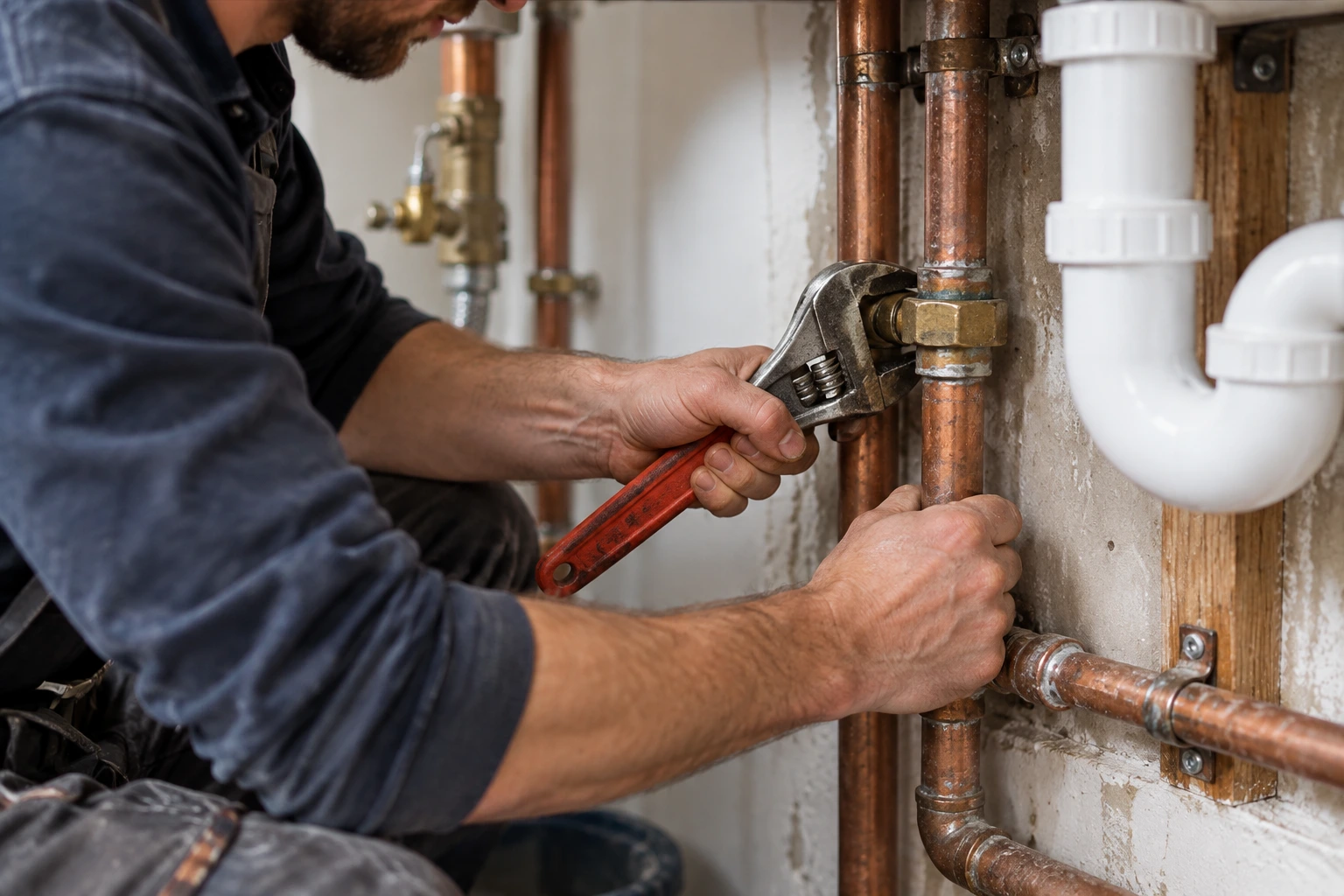
What to do first when a fixture fails
When a fixture fails, the first job is to stop the water at the closest stop, not at a random valve in the yard. We would rather you wait with the drip contained than break a seized stop. The notes below are the same order we use when we arrive, so the house is already in a safer state. They are checks, not repairs, and they keep a small leak from becoming a cabinet full of water.
Locate the stop under the fixture
Most faucets and toilets have a small valve on the supply coming out of the wall or the floor. Turn it clockwise until it stops, then open the fixture to see if flow dies. If it does not die, leave it where it is and move to the house valve only if water is spreading. Tell us which valve you moved so we do not work on a live line.
Checks that are safe while you wait
A few looks help us bring the right cartridge, the right supply, and the right bowl parts. None of these steps require tools beyond a flashlight, and none of them should put you under a live spray. Skip any step that means standing in water or climbing over a rocking toilet. Photos of the tag on the faucet or the inside of the tank lid are enough.
- Look under the cabinet with a flashlight for a wet supply nut
- Try the stop under that fixture only and see if the drip slows
- Photograph the model on the faucet or the tank lid
- Note whether hot, cold, or both sides drip
- Lift the toilet tank lid only if the bowl is steady and see if the flapper is seated
Moves that make a small leak worse
Forcing a frozen handle or caulking a rocking bowl can turn a one-fixture visit into a wall or floor repair. We would rather see the leak as it is. The list below is what we ask people not to do while we are on the way, because each one hides the real failure or opens a bigger one.
- Do not crank a frozen stop with a wrench until it snaps
- Do not keep flushing a rocking toilet
- Do not caulk around a bowl to hide a base leak
- Do not force a cartridge out through the finish
- Do not leave a shower valve with the handle off and the water on
Faucet, valve, and stop problems in Crowley
Dripping faucets and worn cartridges
A dripping faucet in a Crowley bath wastes water and keeps the house noisy after dark. Moderately hard to hard city water leaves scale on cartridge faces, so the drip returns after a washer swap. We treat the drip as a valve problem until a test says otherwise.
Signs it is time to call
- Water ticks in the bath after everyone is in bed
- The handle drips even when it is shoved closed
- The aerator crusts white within a few weeks of cleaning
- The hot side drips more than the cold side
- You hear the drip in the wall but see it at the spout
- The finish at the spout base is staining the bowl or sink
We shut the stop, relieve pressure, and pull the cartridge so we can see the sealing faces. If the body is pitted, faucet installation of a new assembly is cleaner than stacking parts in a scored chamber. If the body is sound, faucet repair can be a cartridge, seats, and a fresh aerator. Summer irrigation along FM 731 raises demand, and a quiet drip shows up as soon as the house is busy.
Shower valves that will not mix or hold temperature
A shower that swings from hot to cold makes a morning harder than it should be. Scale on a pressure-balance cartridge, which keeps hot and cold in ratio, is common on this city water. Older valves behind tile also stick when the spool has not moved in years.
What you might notice first
- The shower jumps hot when a toilet fills
- The handle is stiff or gritty halfway through its travel
- A stable mix will not hold for a whole shower
- Water drips from the spout while the shower should be on
- The trim plate is wet or the wall below it is soft
- The temperature limit does not match the mark on the handle
We map the valve, shut both supplies, and pull the cartridge in the order the maker designed. When the body is good, shower repair is a cartridge, seals, and a temperature-limit reset. When the body is scored, we replace a shower valve behind the wall through a tidy opening rather than opening the whole bath. A plumber to install a new shower trim also verifies the new cartridge is the right family before the handle goes on.
Supply stops that will not close
A supply stop that will not close leaves a Crowley home or business with no way to stop a drip at the fixture. Older multi-turn stops corrode internally and the stem can snap when forced. Builder quarter-turns in newer houses seize if they have never been moved.
How this shows up in the house
- The under-sink stop will not budge
- The stop turns but the faucet still runs
- Green crust sits at the packing nut
- The cabinet floor is wet when you only meant to shut one side
- The toilet stop spins without changing the fill
- The metal handle of the stop feels spongy
We test each stop by closing it and opening the faucet to see if flow actually dies. If a shutoff valve will not turn off, we do not force it; we isolate at the house valve and replace the stop. Angle stops that will not close are a neighborhood baths problem we handle before any faucet body comes off. Closet runs that see a hard freeze can also leave a stop cracked at the packing, and we replace those rather than packing them again.
Kitchen faucet replacement
A kitchen faucet that sprays the window or drips into the sink all day is a Crowley house problem that shows up in dishes and in the bill. Sprayer hoses fail, pull-down weights fall off the hose, and deck nuts loosen under the sink. Hard water scaling makes the same cartridge issues seen in the bath.
Clues at the fixture
- The sprayer stays on after you dock it
- Water weeps at the deck plate during a fill
- The faucet swings and the deck moves with it
- Hot and cold are reversed after a prior swap
- The hose knocks inside the cabinet
- Flow dies to a trickle at the spout but the bath is fine
We shut both stops, disconnect the supply, and lift the faucet as one assembly so the deck is not scarred. Kitchen faucet replacement the same day is possible when the holes match and the stops still work. We set the gasket, snug the deck plate, and check hot and cold for mix and for a drip at the pull-down dock. After dishes and lawn watering, low flow at the kitchen spout is often scale in the aerator, which we clean as part of the set.
Toilets, sinks, and trim on Crowley piping
Toilets that rock, run, or leak at the base
A toilet that rocks on the floor in a Crowley bath soaks the slab and the flooring around it. Closet flanges on slab-on-grade floors sit too low after years of wax compression. A running toilet wastes water every hour the flapper or fill valve fails to seat.
What the bath is telling you
- The bowl shifts when someone sits
- Dark flooring or a sour smell sits at the base
- The tank sweats and the floor is wet anyway
- Water runs into the bowl with the handle at rest
- The handle has to be jiggled to make it stop
- Closet bolts have pulled through the porcelain
Before we set a new bowl we measure the closet flange relative to the finished floor, because a flange that sits too low on a Crowley slab pour will leak at the wax even with a new toilet. We pull the bowl, read the flange, and repair or extend it so we can install a new toilet on an old flange and still get a seal. Fill valves, flappers, and supply nuts get tested with the water on before we caulk the base. If the bowl still rocks after the flange is solid, the floor, not the wax, is the next conversation.
Sink and vanity installations
A bathroom sink that sits loose, or a vanity that was set without support, turns a Crowley bath into a daily annoyance. Drop-in bowls lift, vessel rings leak, and pop-up rods miss the drain. A bathroom sink faucet leaking under the cabinet often starts at a builder-grade supply nut or a half-seated tailpiece.
Early warnings at the sink
- The bowl lifts when you lean on it
- Water sits on the cabinet floor after a hand wash
- The pop-up does not hold
- The faucet wiggles in the deck
- Caulk at the bowl rim is stained or pulling away
- The trap is wet at the slip nut
Sink installation starts with the cabinet level, the drain aligned, and the stops still able to close. We set the bowl, compress the drain gasket, and only then mount the faucet so the lead is not fighting the deck. Supply lines get new ferrules, and we watch the cabinet floor during a full fill and drain. If the disposal connection is the leak, that job belongs with garbage disposal repair rather than more putty on the sink.
New fixtures on older piping
Putting bright new trim on older piping in a Crowley house can hide a weak adapter until the first full pressure test. Galvanized steel typical of houses before the mid-1970s threads poorly to modern faucets. Copper from the 1970s through the 1990s is kinder, but old compression rings still weep.
Things that show up after a swap
- A brand new faucet weeps at the adapter
- Galvanized threads crumble when the old faucet comes off
- The new supply line stains at the ferrule
- Water hammer follows after the new cartridge slams shut
- The old stop weeps once pressure is back
- Copper and steel share the same cabinet
We open the stop, read the pipe material, and pick the adapter so the new fixture is not carrying the old thread. Dielectric unions belong where steel meets copper, and we do not skip that step to save a few minutes. Main Street houses in the civic core often mix these materials in one bath, so we test each stub on its own. After the set we run both hot and cold and wipe every joint dry to prove the connection.
Punch-list trim on newer builds
New Crowley houses from the 2010s wave can still hide a bad valve behind builder punch-list trim. PEX and PVC typical since about 2000 are fine in the wall, but the valve in the shower or the stop under the sink may be light-duty. A pretty handle does not mean the cartridge was seated.
What new-build trim can hide
- The shower handle spins without moving water
- A stop under a new vanity will not close
- Trim sits crooked because the valve is not centered
- Air stays in the line for days after a punch-list swap
- The cartridge is the wrong family for the body
- Water sits behind the trim plate with no drip at the spout
We pull the trim, check the valve depth, and operate the cartridge through its full travel before we bless a punch list. Lasater Ranch baths with later suburban stock get the same test as a custom tile shower. If the valve is dead, new trim will not save it, and we replace the valve rather than stacking another kit on a failed spool. Horse Creek Farms larger-lot houses see the same builder valves, just with longer supply runs that take longer to purge air.
Repair the fixture, replace it, or fix the line
Choosing whether to repair the fixture, replace the fixture, or fix the line behind it starts with a test, not a pile of parts. In Crowley we shut the stop, watch whether the drip dies, and only then pull trim. If the stop itself will not close, shutoff valve replacement comes before any pretty faucet, because a cartridge swap with a live supply is a wet mess. The home or business sees the stop test first so the choice is based on what the water is doing.
If the body is sound and the cartridge faces are just scaled, repair is the smaller job and it often takes under an hour once parts are in hand. City water in this town scores builder-grade cartridges in Lasater Ranch the same way it scores older brass. We match the cartridge to the valve family so the handle lines up and the temperature stop still works. That keeps a faucet repair from turning into a handle that points at the drain when it is off.
When the body is pitted, the finish is peeling into the aerator, or the toilet flange on a slab is crumbled, replacement is the cleaner path. Toilet installation on a crushed flange needs flange work on the slab, not a second wax ring. Faucet installation on a deck with rotten wood needs a sink installation plan, not only a taller spout. We show the flange height and the deck before we commit to setting new bathroom fixtures.
If the leak is in the wall, under the slab, or on a polybutylene run typical of late 1970s through 1990s stock, the fixture is not the job. We stop, cap, and shift to pipe repair rather than hiding a bad line behind new trim. New fixtures on older galvanized in Original Town can look fine and still weep at the adapter. That is the line talking, and it belongs with pipe work rather than a handle swap.
How a fixture visit runs at your house
What we gather when you reach out
When you reach out, we ask which fixture, whether the stop still turns, and whether water is on the floor. A photo of the leak and the model tag saves a return trip for parts. Crowley houses on slab need us to know if the bath is on the original pour or a later addition. That takes a few minutes on the first contact, and we are available 24/7 so the drip does not have to wait for weekday hours.
How we set the visit
We give an arrival window and say which tests come first so someone at the house knows what to expect. For a single faucet, the on-site work often starts within the first half hour after we walk in. A shower valve in tile takes longer because we protect the finish before we open anything. If a second fixture is already failing, we say so before we start so the visit order is clear.
Tests we run before we pull trim
The home or business sees the stop test, the drip test, and the flange or deck check before we commit to a path. We would rather spend that time up front than open a wall for a washer. We explain the reading in the room before any trim comes off. If the part is on the truck, the repair follows in the same visit.
Repair, set, and the last walk-through
Once the path is clear, we replace the part, set the fixture, and bring the water back up slowly. We wipe every joint, cycle the handle through hot and cold, and have you watch the last pressurization. The bath is left dry, the old parts are bagged, and the stops are shown in the open and closed position. That last check is how we catch a supply nut that only weeps when the line is full.
Where we work and what we see on fixtures
Crowley houses and neighborhood baths
The Sanger soil series shrinks when it dries and heaves when it wets, and that movement on slab-on-grade houses in Crowley rocks toilets and strains the stubs that feed faucets. City of Crowley water is moderately hard to hard, so cartridges and aerators scale and a dripping faucet returns after a simple washer change. Summer heat and lawn demand make low flow and handle drips easier to notice when every bath is in use. Neighborhood baths fail in those three ways more than from a single bad night of use.
When the leak is not the fixture, pipe repair is the right visit instead of more trim. A dead hot water heater belongs with water heater work, not a new spout. After-hours flooding belongs with emergency plumbing. Whole-house questions live on our plumbing services list and on the Crowley plumber overview.
Fixture work in Cresson
Cresson sits at the Hood, Johnson, and Parker county corners, not in Tarrant County, and the water seller is not City of Crowley. City of Cresson serves Cresson Proper and Bluebonnet Hills, while other pockets use separate operators, so cartridge scale is not the same story as Crowley city water. Ranch houses along US 377 and SH 171 still need faucet, toilet, and shower work, and fixture calls in Cresson follow that water and those roads.
Questions about faucets, stops, and valves
Why does a faucet keep dripping after I change the aerator?
The aerator is the screen at the tip, and it only catches debris. A faucet dripping all night is almost always the cartridge or the seats, especially when city water leaves scale on the sealing faces. We shut the stop, pull the cartridge, and read those faces before we talk about a new faucet. If the body is scored, a new cartridge will drip too.
Why will the shutoff under my sink not turn?
Stops that never move seize, and older multi-turn stems corrode until they snap. If a shutoff valve will not turn off, forcing it often opens a full-flow leak in the cabinet. We close the house valve when needed, replace the stop, and only then pull the faucet. Quarter-turn stops in newer Crowley houses can look closed and still pass water, so we test by opening the faucet after the stop is seated.
Should I repair a dripping cartridge or replace the whole faucet?
Repair makes sense when the body is smooth and the cartridge family is still available. Replace makes sense when the chamber is pitted or the deck is rotting. We show the chamber with the water off so the choice is visible. Crowley baths with scaled city water often need the body replaced because scale has already cut the brass.
Will a new kitchen faucet work on older copper supply lines?
Copper supply from the 1970s through the 1990s will take a new kitchen faucet if the stops are sound and the hole pattern matches. We replace old compression rings rather than reusing a ferrule that has already bitten the tube. If the stubs are galvanized, we add the right adapter first. Kitchen faucet replacement still depends on those stops closing.
Questions about toilets, showers, and timing
What should I do when a toilet keeps running after I jiggle the handle?
Jiggling seats a flapper for a few minutes, but a toilet that keeps running is a fill valve, a flapper, or a refill tube aimed at the overflow. If water pours into the overflow, shut the stop at the wall. Toilet repair on our visits starts with that stop, then the flapper, then the fill height. If the bowl rocks, stop flushing until the flange is read.
What does a plumber near me check first when a toilet rocks on the floor?
The first check is whether the closet bolts are simply loose or the flange has broken away from the slab. We rock the bowl with the water off and look for moisture at the base. If the flange is low or cracked, a new wax ring will not hold, and we repair the flange before any toilet installation. On Crowley slab-on-grade baths that measurement at the finished floor decides the rest of the visit.
Can you replace a shower valve behind the wall without tearing up the whole bath?
Often yes, if we can reach the valve through a modest opening from the shower or from a closet on the other side. We shut both supplies, pull the trim, and measure valve depth before we cut. Shower valve replacement in Crowley tile baths is a valve and a patch when the piping around the valve is sound. If the pipes are the failure, we treat it as line work.
How long does a typical fixture visit take from arrival to the last check?
A cartridge or toilet fill valve is often finished in the first hour after we arrive, including the stop test and the last pressurization. A shower valve in tile or a sink installation with a new deck takes longer because we protect finishes. We tell you the path after the first tests. Visits that also need a stop replaced add the house-valve step before any trim goes on.
Fixture installation in Crowley covers the drip, the rocking bowl, the shower that will not mix, and the stop that will not close. Crowley Plumbing Co sets faucets, toilets, and valves for houses, townhomes, condos, and businesses, and we test the stop and the supply before we pull trim so a bad line does not get a pretty cover. When the job is a fixture, we finish the last pressurization in the room. When it is a line, a heater, or an after-hours flood, we point you to that work instead. Cresson fixture calls get the same stop-first order on a different utility and different counties.
Reach out to us for assistance.
Service ZIPs: 76036, 76035
- NEED PLUMBING HELP?
Plumbing Problem? Call Crowley Plumbing Co Today
From clogged drains and leaking pipes to water heaters, sewer lines, and emergency plumbing, our team provides reliable plumbing service for homes.